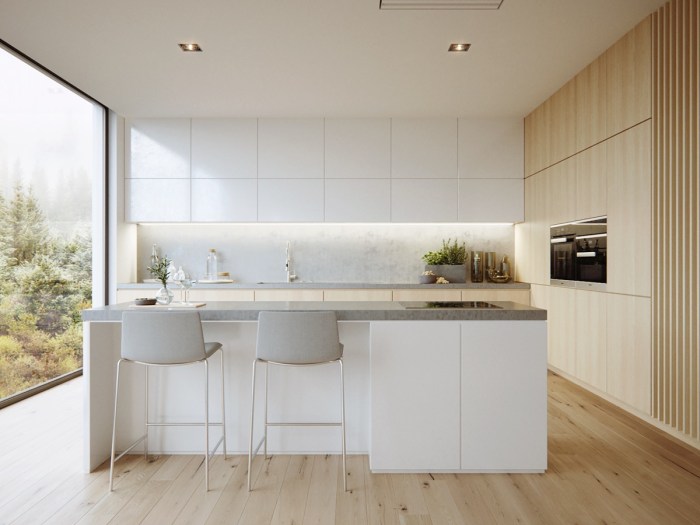
With Minimalist Design for Kitchens at the forefront, this piece invites readers into a realm of clean lines and efficient spaces, promising a journey filled with insights and inspiration.
From exploring key principles to optimizing storage, embark on a quest to discover the essence of minimalist kitchen design.
MINIMALIST DESIGN FOR KITCHENS
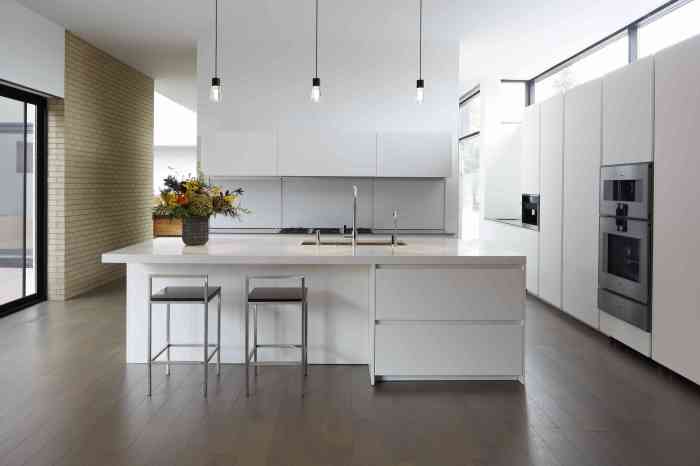
Minimalist design in kitchens focuses on simplicity, clean lines, and a clutter-free environment. The key principles include using minimal decorations, sleek surfaces, and maximizing functionality.
Materials Used in Minimalist Kitchen Designs
In minimalist kitchen designs, common materials used include:
- Stainless steel for appliances and fixtures
- Quartz or marble for countertops
- Wood or laminate for cabinets
- Glass for backsplashes
Optimizing Storage in a Minimalist Kitchen
Storage is essential in a minimalist kitchen to maintain a clutter-free space. Here are some tips to optimize storage:
- Utilize vertical space with tall cabinets or shelves.
- Use pull-out drawers and organizers to maximize space in cabinets.
- Minimize countertop clutter by storing appliances in cabinets when not in use.
- Consider built-in storage solutions like pull-out pantry shelves or corner cabinets.
MODERN CLASSICS IN KITCHEN DESIGN
When it comes to modern classic kitchen design, it refers to a timeless aesthetic that combines contemporary elements with traditional styles. This design approach focuses on clean lines, simplicity, and functionality while incorporating classic elements that add warmth and character to the space.
Comparing Modern Classic with Traditional Kitchen Designs
Traditional kitchen designs often feature ornate details, intricate patterns, and rich textures, creating a sense of opulence and grandeur. On the other hand, modern classic kitchens embrace a more minimalist and streamlined look, with a focus on simplicity and functionality.
Tips for Incorporating Modern Classic Elements into a Minimalist Kitchen
- Opt for timeless materials like marble, wood, and stainless steel to add a touch of elegance to your minimalist kitchen.
- Choose classic cabinet styles such as shaker cabinets or flat-panel doors with simple hardware for a modern classic look.
- Add vintage-inspired light fixtures or accessories to bring a sense of nostalgia and warmth to your minimalist kitchen.
- Consider incorporating subtle architectural details like crown molding or wainscoting to create a sophisticated yet understated look.
MODERN LIVING AND MINIMALIST DESIGN
Minimalist kitchen design is closely intertwined with modern living trends, reflecting the desire for simplicity, functionality, and efficiency in contemporary homes. The clean lines, uncluttered spaces, and focus on essential elements make minimalist kitchens the perfect fit for the fast-paced lifestyles of today.Minimalist kitchen design enhances functionality in modern homes by optimizing space and promoting organization. With streamlined cabinets, hidden storage solutions, and sleek finishes, minimalist kitchens prioritize practicality without sacrificing style.
This approach allows for easy movement within the kitchen and efficient use of every inch of space available.
Complementary Elements of Minimalist Kitchen Design
Minimalist kitchen design complements contemporary lifestyles in various ways, such as:
- Integration of smart technology: Minimalist kitchens often incorporate high-tech appliances and gadgets to streamline cooking processes and enhance convenience.
- Emphasis on sustainability: Many minimalist kitchen designs focus on eco-friendly materials and energy-efficient solutions, aligning with the growing emphasis on sustainability in modern living.
- Open-concept layouts: Minimalist kitchens often feature open layouts that seamlessly blend with living and dining areas, promoting a sense of unity and connectivity in the home.
- Neutral color palettes: Minimalist kitchens typically use neutral colors like white, gray, or beige, creating a serene and calming environment that complements modern interior design trends.
As we conclude our exploration of Minimalist Design for Kitchens, we’ve uncovered the art of simplicity and functionality in culinary spaces, paving the way for a harmonious blend of form and function.
FAQ Resource
How can minimalist design principles be applied effectively in small kitchens?
Maximize vertical space, choose sleek appliances, and opt for multi-functional furniture to create an illusion of spaciousness in compact kitchens.
Is it possible to have a warm and inviting minimalist kitchen design?
Absolutely! Incorporate natural textures, warm lighting, and personal touches to infuse coziness into your minimalist kitchen.
What are some budget-friendly materials for minimalist kitchen designs?
Consider using laminate, concrete, or wood veneer for countertops, cabinets, and flooring to achieve a stylish minimalist look without breaking the bank.